Why does drainage matter so much for a foundation in Tyler?
Because clay changes size with water. Many Tyler lots have sandy topsoil over clay that swells when it's soaked and shrinks when it dries. When rain runs toward one side of the house, or a downspout empties against one corner, that side gets wetter than the rest. The clay there swells while the rest doesn't, and the foundation bends.
Tyler gets plenty of water to cause that. In 2015, Tyler Pounds Regional Airport recorded more than 68 inches of rain, according to Tyler Texas Online's weather page, and in 2011 the city got less than 25 inches, per the National Weather Service. Drainage can't change the weather, but it can stop one side of the house from getting far more of it than the other.
What does foundation drainage work involve?
The Texas Section of the American Society of Civil Engineers lists drainage recommendations in its residential foundation repair guidelines. The main pieces:
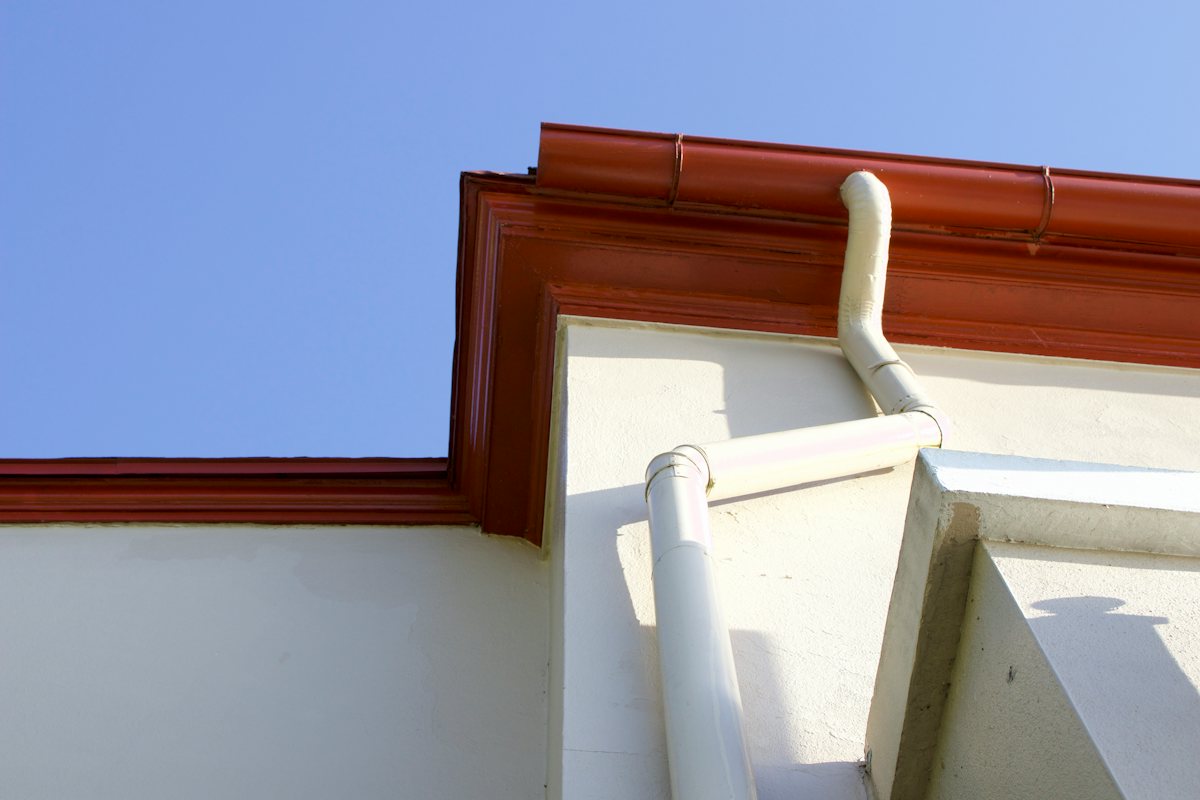
- Gutters and downspouts. Downspouts should be extended well past the foundation and past any planting beds next to it, into areas that drain well.
- Grading. Where practical, the ground should slope away from the foundation at least 5 percent for the first 10 feet. That's 6 inches of drop over 10 feet.
- Swales. Shallow channels that carry water around the house should slope at least 2 percent where practical, and at least 1 percent.
- Surface drains. Where the yard can't be graded to drain, solid pipe with cleanouts carries water from low spots to a safe outlet.
- French drains. Perforated pipe in a gravel-filled trench collects water from the soil itself. The guidelines say it should slope at 2 percent where practical, and that downspouts and surface drains shouldn't be tied into it.
A drainage plan usually mixes a few of these. Not every house needs a French drain, and some don't need anything more than longer downspouts.
When does a house need drainage work?
- Water stands next to the foundation for hours after a rain
- Downspouts empty right at the base of the wall, or have no extensions at all
- Flower beds are built up higher than the slab edge, with edging that holds water in
- The yard slopes toward the house, or a neighbor's yard drains onto yours
- Soil washes out along the slab edge, or mulch floats away in heavy rain
- The crawl space is damp, smells musty, or has standing water
- A foundation repair is planned, since the cause should be fixed with it
A wet crawl space is best fixed at the source first. Once the water is going somewhere else, a sealed vapor barrier or full crawl space encapsulation can keep ground moisture away from the floor framing.
Why do drainage problems happen?
Houses settle into their lots over the years. Beds get built up, patios and driveways get added, and the slope that once carried water away gets flattened or reversed. Gutters clog with pine needles and oak leaves, overflow at the corners, and drop water right at the foundation. In older neighborhoods, drainage often wasn't designed much at all. Each of these is a fixable cause of foundation movement.
Patios and walks are a common culprit. One that settles and tilts toward the house sends rain straight at the foundation, and replacing it is concrete work, not foundation repair. Contractors who pour patios and stamped concrete slope new slabs away from the house for exactly this reason.
What affects the cost of foundation drainage?
- How much water and from where: roof runoff, a neighbor's yard, or groundwater
- The type of system: extensions and regrading cost far less than trenching a French drain
- Length and depth of any trench, and where the water can be sent
- What's in the way: driveways, patios, sidewalks, sprinkler lines, and tree roots
- Landscaping restoration after the work
- Retaining walls, if a slope has to be held back. The City of Tyler requires a permit for all retaining walls, and walls over 4 feet need plans sealed by a licensed engineer.
Is drainage enough, or does the foundation need repair too?
If the foundation has moved only a little and the movement tracks the seasons, drainage and even watering may be all it needs. If it has already dropped enough to crack the structure or jam doors, drainage keeps it from getting worse, but it won't lift the house back. In that case drainage goes with slab repair or pier and beam repair, not instead of it. An inspection tells you which you're dealing with.
Frequently asked questions
Can I connect my downspouts to a French drain?
The Texas ASCE guidelines say not to. Downspouts carry a lot of water fast, and dumping it into perforated pipe can push water into the soil next to the foundation instead of away from it. Downspouts belong in solid pipe or on extensions.
How far should downspouts discharge from the house?
Far enough to clear the foundation and any planting beds, onto ground that slopes away. On many lots that means several feet. The right distance depends on how your yard drains.
Do I need to water my foundation if I fix the drainage?
In a dry summer, often yes. Drainage keeps the soil from getting too wet in one spot. Watering keeps it from drying out and shrinking during a drought. See watering your foundation in a drought.
Will a French drain dry out my foundation too much?
The aim is even moisture, not dry soil, so placement matters. A drain should be planned around the whole foundation, not just the wet spot. Ask the contractor where it will run, how deep, and how it keeps one side from drying out more than the others.
Talk to a foundation contractor in Tyler
Call and describe what you're seeing, or send the form with a few details. An independent foundation repair contractor will follow up to set a time to look at the house.