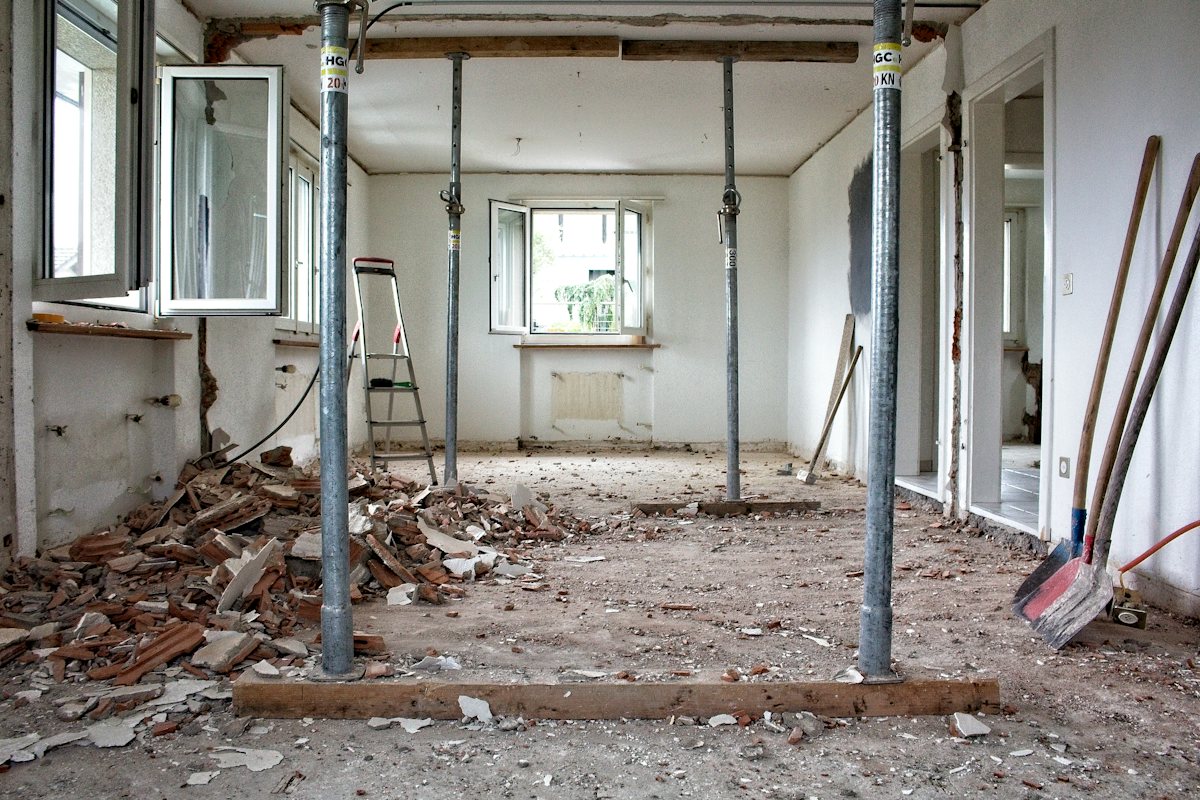
What is house leveling, and how is it different from foundation repair?
House leveling is the adjustment part of foundation repair. Foundation repair as a whole covers finding the cause, adding support, and fixing drainage. Leveling is the step where the low areas are raised back toward the high ones.
On a slab, leveling happens after new supports go in. The slab is lifted from those supports in small increments. On a pier and beam house, leveling usually means adjusting shims on top of the piers, or adding piers where the floor sagged between them. The slab and pier and beam pages explain the support work in detail.
How is a house leveled?
- An elevation survey. Someone takes floor readings across the house with a level or laser and maps the high and low spots. The Texas Section of the American Society of Civil Engineers' repair guidelines call for existing floor elevations in the repair documents and for a floor elevation survey after the work.
- A reference point. The crew picks the area that moved least as the target and plans how much each low area should come up.
- Lifting in stages. Jacks raise the low areas a little at a time while the readings are checked, so the slab, framing, and walls have time to follow.
- Locking it in. Supports are set at the new height, with shims or caps that won't compress.
- Plumbing test. Lifting stresses pipes, so the guidelines recommend leak testing water and drain lines when a repair includes lifting. Gas lines may need adjusting too.
- A final survey that shows how far each area came up, which you should get a copy of.
How level can a Tyler house get?
Closer, not perfect. The Texas ASCE guidelines say plainly that it's unlikely elevation adjustments will result in a level foundation. Pushing a slab or old framing too far, too fast, can crack concrete, tile, and walls that have adjusted to the house's current shape. Field judgment about how far to go matters more than a target number.
For context, the same guidelines note that a tilt greater than 1 percent is usually noticeable. Floors also aren't built perfectly flat to begin with, and older homes in Tyler have often been remodeled in ways that changed floor heights. A good contractor tells you up front what's realistic for your house.
When does a house need leveling?
House leveling is worth looking into when the house shows several of these at once:
- Doors and windows that stick, swing open by themselves, or have uneven gaps
- Floors you can feel sloping, or furniture and appliances that rock
- Cracks that follow the slope, in brick, drywall, or tile
- Cabinets and countertops pulling away from the wall
- A home inspection or engineer's report that recommends it
Why do houses in Tyler settle unevenly?
The clay under much of Smith County swells when it's wet and shrinks when it dries, and it rarely does either evenly. The edges of the house dry faster than the middle. A big tree on one side drinks more water than the lawn on the other. A downspout soaks one corner every time it rains. Each of those leaves part of the house higher or lower than the rest. Leveling corrects the result. Fixing the drainage and watering corrects the cause.
What affects the cost of house leveling?
House leveling is priced on the work it takes to get there, not a flat rate. The main factors:
- How much of the house is low, and by how much
- Foundation type, since adjusting shims on piers is a different job than lifting a slab on new supports
- How many new supports are needed before anything can be lifted
- Access, like a low crawl space, finished interiors, or landscaping in the way
- Engineering and surveys before and after
- Repairs afterward, such as patching drywall, re-hanging doors, or fixing plumbing
The foundation repair cost guide has 2026 price ranges.
Is it better to re-level now or wait?
If the house is still moving, it's often better to fix the cause and support it first, then level. Leveling a house that's still drying out or still soaking from a leak can mean doing it twice. If the movement has stopped and the problem is the result, like doors that won't close, leveling can be done once support and drainage are in good shape.
Frequently asked questions
Will my doors work again after leveling?
Most do, or work much better. Some doors and windows were trimmed or re-hung over the years to fit the house as it settled, so they may need adjusting again after leveling.
Can leveling cause new cracks?
It can. Lifting changes the shape of the house, and finishes that adapted to the old shape can crack. That's one reason good crews lift gradually and stop short of perfect. Ask what cosmetic repairs are included.
How long does leveling take?
Many leveling jobs take a few days once supports are in place. The survey, any engineering, and plumbing repairs can add time before and after.
Do I need an engineer to level my house?
Not for every job. It's worth it for a large lift, a house you're buying or selling, or when two contractors disagree about how much to raise it. See foundation inspections.
Talk to a foundation contractor in Tyler
Call and describe what you're seeing, or send the form with a few details. An independent foundation repair contractor will follow up to set a time to look at the house.